Timber
The numbers, not the adjectives
Here is what the timber is, how it is dried and graded, what the machines can do and the tolerances you can design to. If your job sits outside these, say so — our capacity is wider than this page and we will tell you honestly whether it is possible.
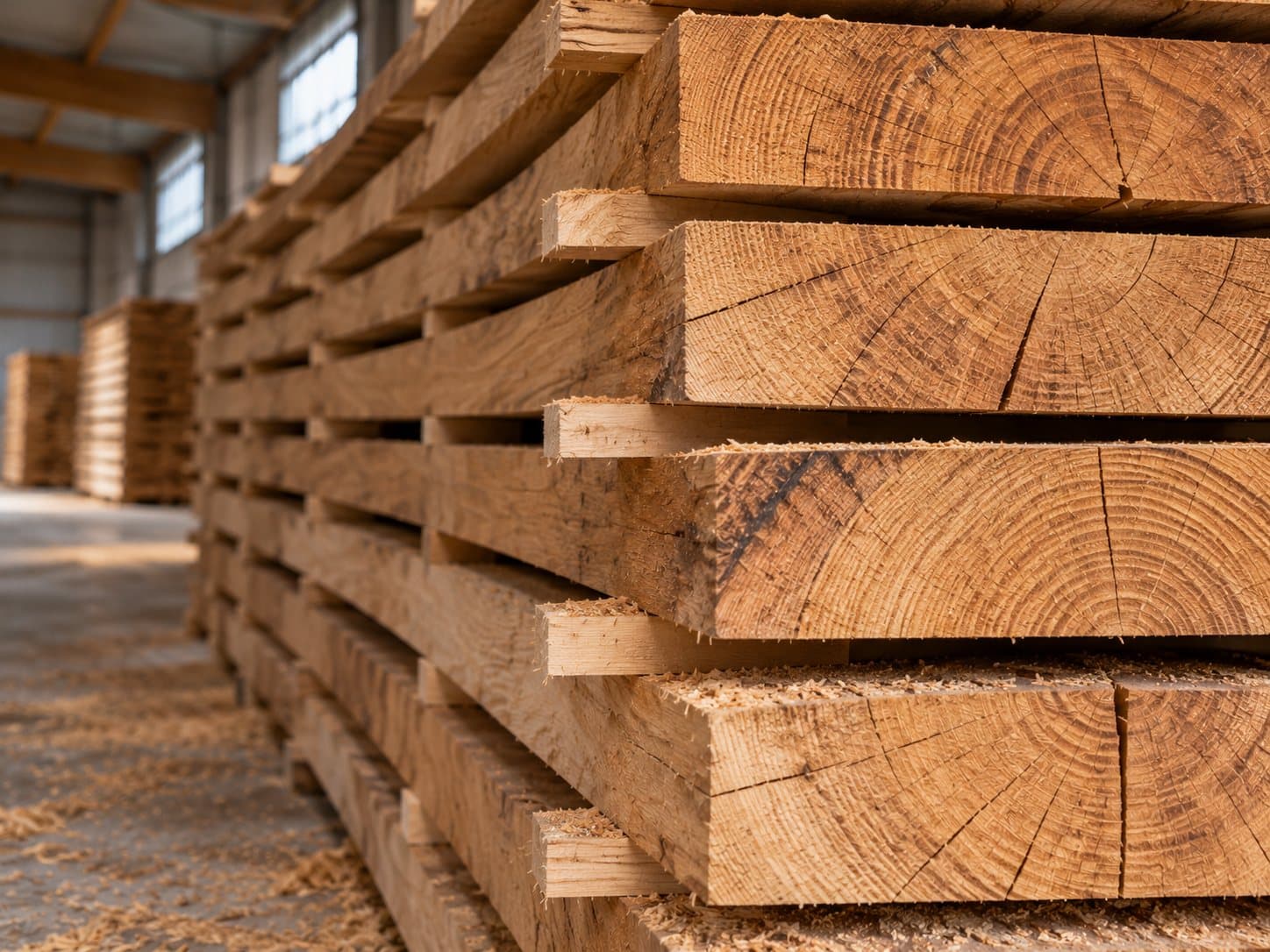
Timber we hold
European oak is the standard and is always in stock. Anything else is bought in for the job — it adds a little to the lead time, not a problem.
| Timber | Grades | Supplied as | Notes |
|---|---|---|---|
| European oak | Prime (AB), Character (ABC), Rustic (CD) | Boards, table tops, panels, flooring and stair parts | Our standard timber, kiln dried to 8–10%. |
| Ash | Prime, Character | Boards, panels, stair parts, table tops | Pale, straight-grained; takes stain well. On request. |
| Beech | Prime | Boards, panels | Even, close grain for furniture components. On request. |
| Walnut and sycamore | Prime, Character | Boards, panels, table tops | Bought in for specific jobs — adds a little to the lead time. |
What the grades mean
Prime (AB)
Clean, even grain and colour. Small sound pin knots allowed. For a clear, modern look on table tops, treads and furniture.
Character (ABC)
Sound knots, some colour variation and the odd filled feature. The classic oak look, and the best value where the timber is meant to look like timber.
Rustic (CD)
Larger knots, splits filled, strong colour change. Flooring, boards and pieces where the grain is the point.
Processes & capacities
01
Sawmilling
Oak logs are converted at a sawmill that does nothing else, so boards are cut to the sizes we actually sell rather than resawn later.
- Board thickness
- 20 – 100 mm sawn
- Board length
- Up to 4 m; longer on request
- Grades
- Prime (AB), Character (ABC), Rustic (CD)
02
Kiln drying
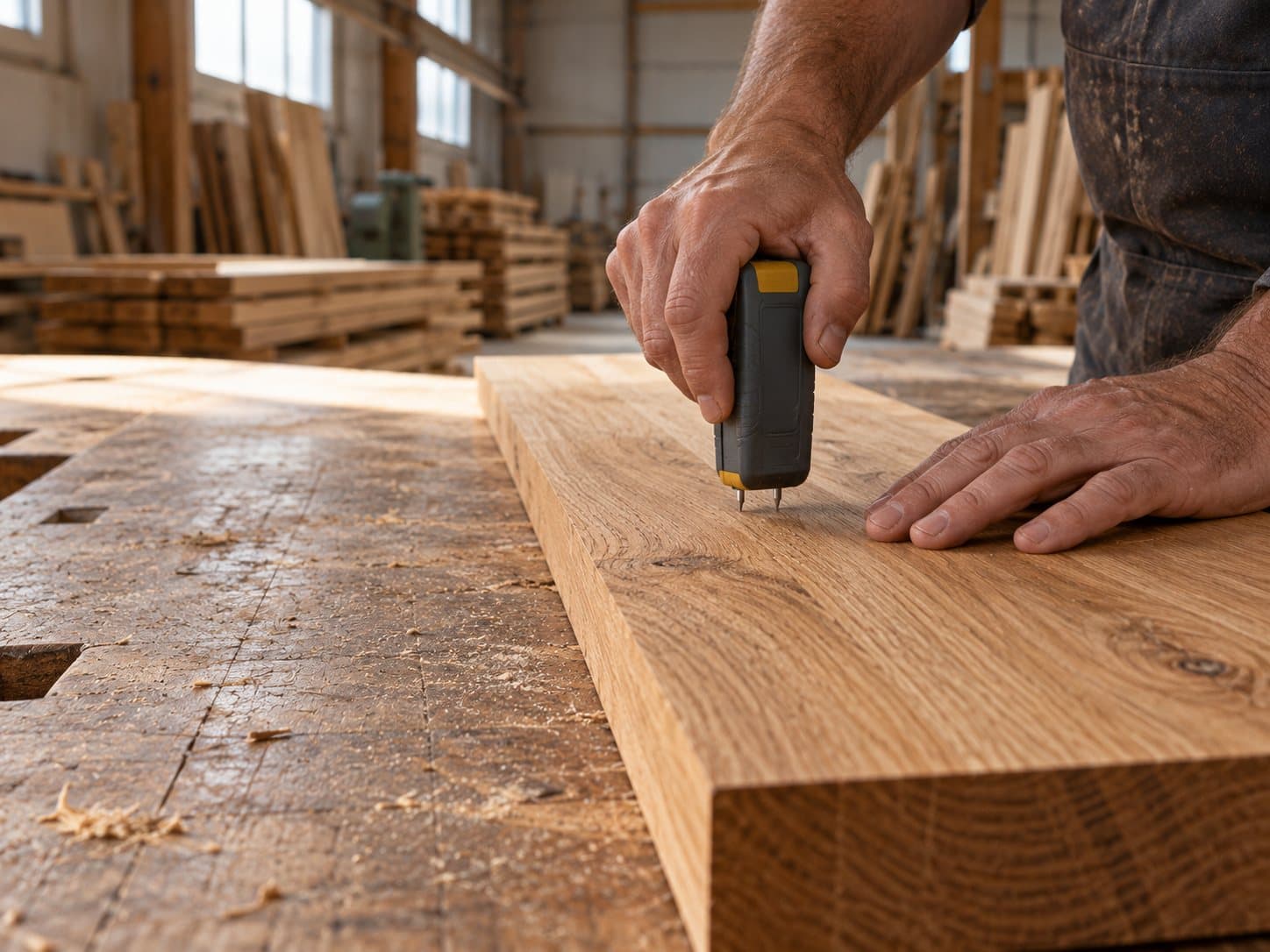
Every board for interior use is kiln dried to 8–10% moisture content and rested before it is machined, which is what stops table tops cupping and treads shrinking once the heating goes on.
- Interior timber
- 8 – 10% moisture content
- Exterior timber
- 16 – 18% moisture content
- Method
- Conventional kilns with a rest period after drying
- Checked
- Meter reading recorded per batch before machining
03
Planing & profiling
Four-side planers and moulders for planed boards, flooring and handrail profiles. Standard profiles are held; a custom profile is a tooling job, not a problem.
- Max section
- 300 mm wide × 160 mm thick
- Max length
- 4.2 m
- Tolerance
- ± 0.5 mm on planed sizes
- Profiles
- Flooring, handrails, nosings, edge profiles
04
Panel gluing
Full-stave and finger-jointed panels pressed from selected staves, then calibrated flat and sanded. Table tops, panels and stair treads all come off the same line.
- Max panel
- 4200 × 1200 mm
- Thickness
- 18 – 60 mm
- Construction
- Full stave or finger-jointed
- Adhesive
- D3 / D4 PVA, interior and humid-interior rated
05
Cutting to size & CNC
Boards and panels cut to your list on beam saws, with shaped parts, cut-outs and housings done on CNC from a DXF or a template.
- Cut tolerance
- ± 0.5 mm
- CNC bed
- 3100 × 1550 mm
- Files
- DXF, DWG, or a cardboard template
- Labelling
- Every piece labelled to your list number
06
Sanding & finishing
Wide-belt sanding to 120 or 150 grit, then hardwax oil or lacquer applied on the line as standard, so table tops and treads arrive ready to fit rather than ready to finish.
- Sanding
- Calibrated, then 120 or 150 grit
- Oil
- Hardwax oil, natural or tinted
- Lacquer
- Clear water-based lacquer, matt or satin
- Brushing
- Brushed texture for flooring and panelling
Finishes
Hardwax oil on both faces is the default for anything you touch. Lacquer where a wipe-clean surface matters more than the feel of the timber. Unfinished when you want to match existing work on site.
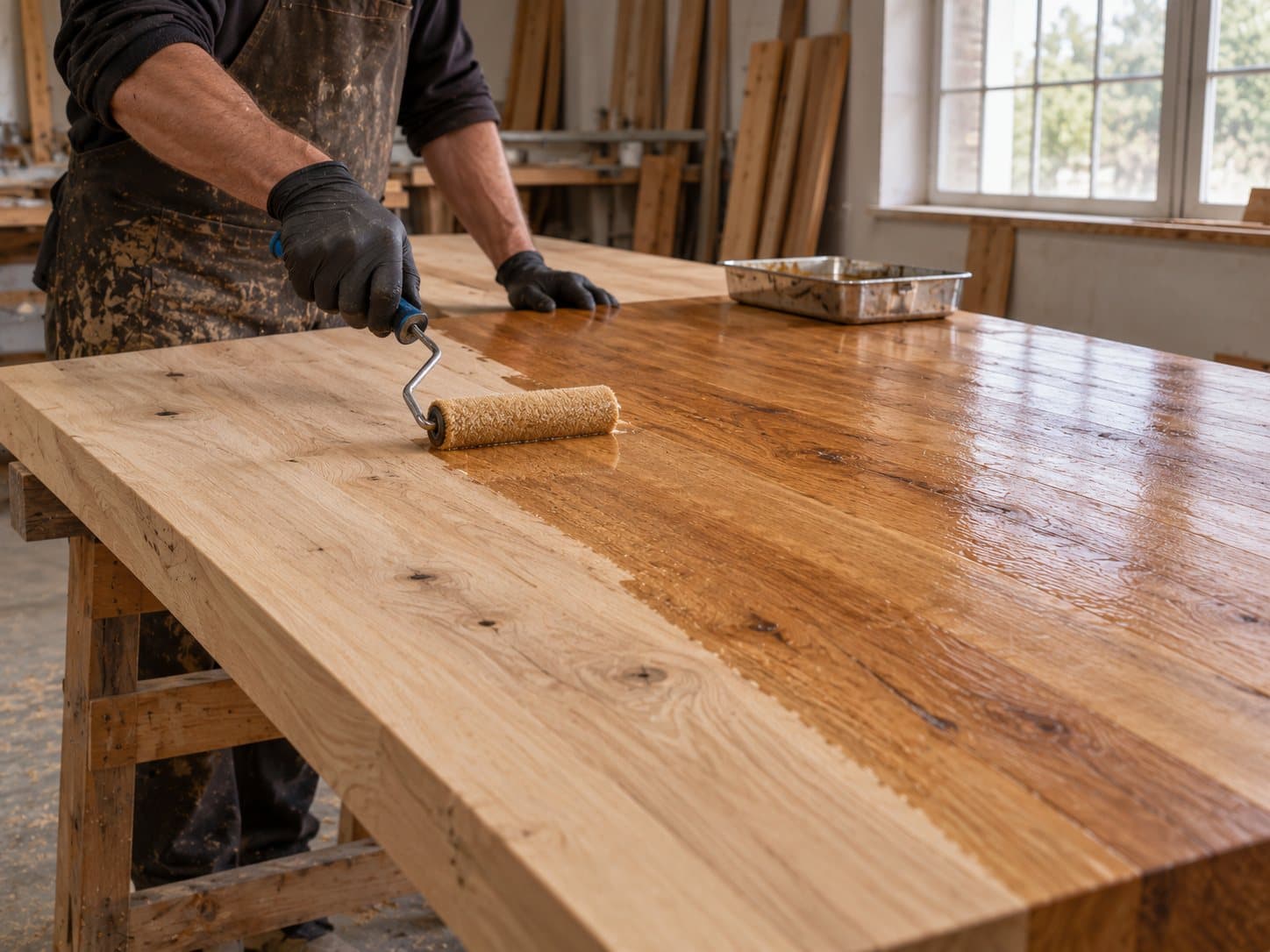
Hardwax oil
Two coats of hardwax oil, natural or tinted, applied on the line and cured before packing.
Typical use · Table tops, treads, handrails and flooring — the default for anything you touch.
Clear lacquer
Water-based lacquer in matt or satin, sanded between coats.
Typical use · Flooring in busy areas, panels and stair parts that want a wipe-clean surface.
Brushed and oiled
Soft grain brushed out before oiling, which shows the texture and hides small marks.
Typical use · Flooring and rustic-grade table tops.
Unfinished
Sanded to 120 grit, ready for your own oil, stain or paint on site.
Typical use · Boards and panels for joinery, painting, or finishing to match existing work.
How is the work checked?
Capacity is only half of it. Inspection stages and the packing standard are set out in full on the quality page.
Quality →Not sure it is possible? Ask.
Send the awkward job — the 4 m table top, the extra-thick tread, the odd-sized panel. Somewhere in our plants there is a machine for it, and if there is not we will say so.